Joseph
Suchyta

Mechanical engineer who designs parts in NX and SolidWorks, then builds, installs, and tests them. MS and BS in Mechanical Engineering from Wayne State University, and two seasons as Engine Systems Lead for the Warrior Racing Formula SAE team.

CurrentlyTest Engineer, Excel Engineering
EducationMS & BS Mechanical Engineering, Wayne State University
CAD / CAESiemens NX, SolidWorks, Ansys Fluent, HyperMesh
Based inGrosse Pointe, Michigan

Open to engineering design roles in metro Detroit

Warrior Racing FSAE, engine systems

Engine Systems Lead, September 2024 to May 2026. Each part below was packaged in the car, drawn, fabricated, and run at competition.

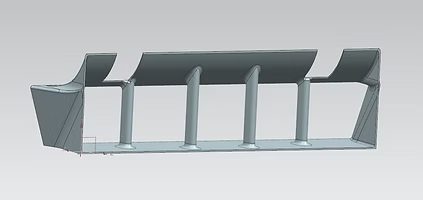
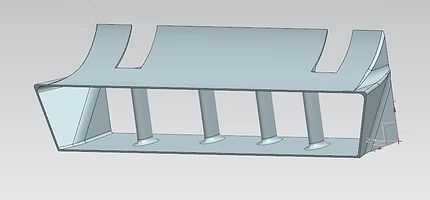
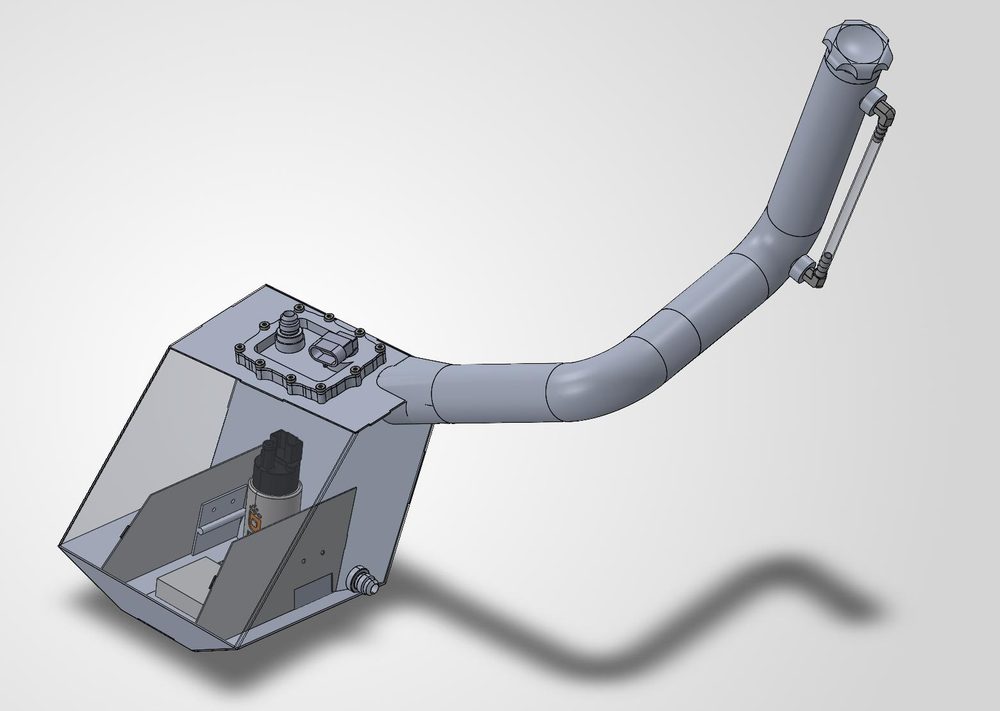
CAD render of the FSAE fuel tank with filler neck
Folded and tabbed sheet-aluminum tank with filler neck, internal trap doors, and baffles.

Fuel tank

Sheet aluminum, 0.050″ · packaged behind the driver between cockpit and firewall

  • Right-sized the tank from 5.6 L to 4 L, an 8% margin over the 3.676 L used in Endurance 2026, while meeting fueling requirements under all operating conditions.
  • Cut mass from 1,200 g to 726 g with thinner-gauge aluminum (0.050″ vs 0.063″) and folded, tabbed sheet-metal construction.
  • Internal trap doors and baffles keep fuel at the pump. Validated fuel pressure with as little as 0.2 L remaining.
40%lighter
4 Lcapacity
0.2 Lvalidated minimum
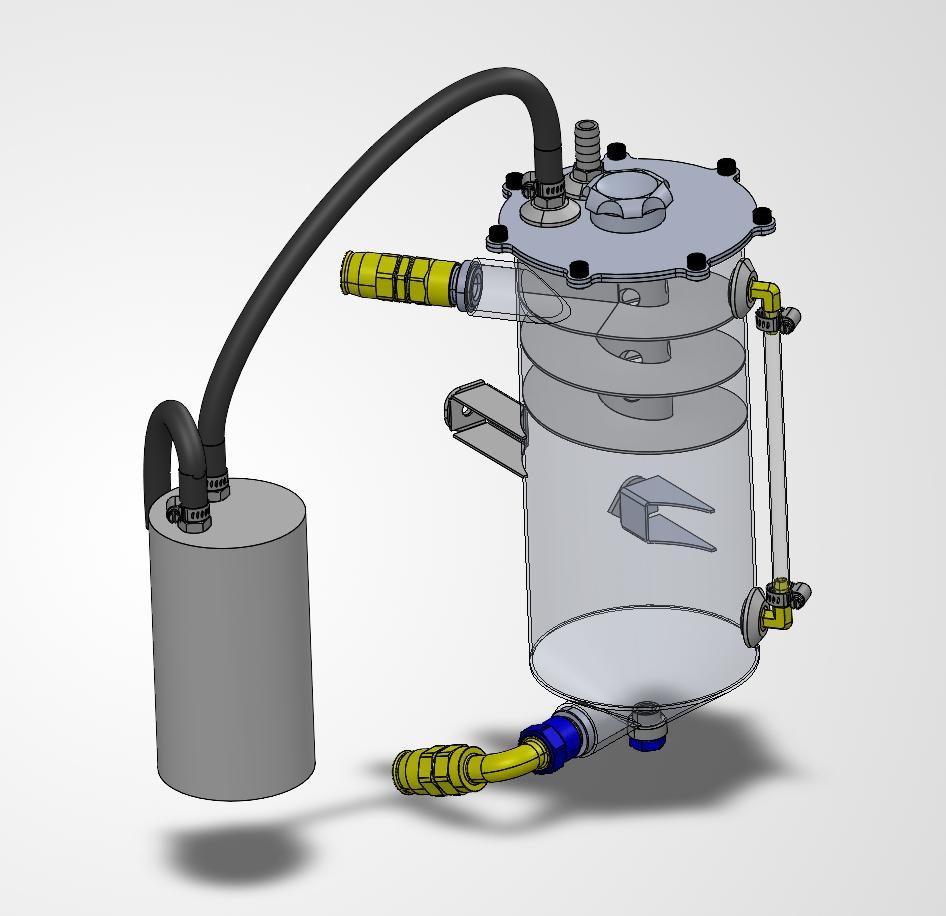
CAD render of the dry-sump oil reservoir and catch can
Welded aluminum oil reservoir
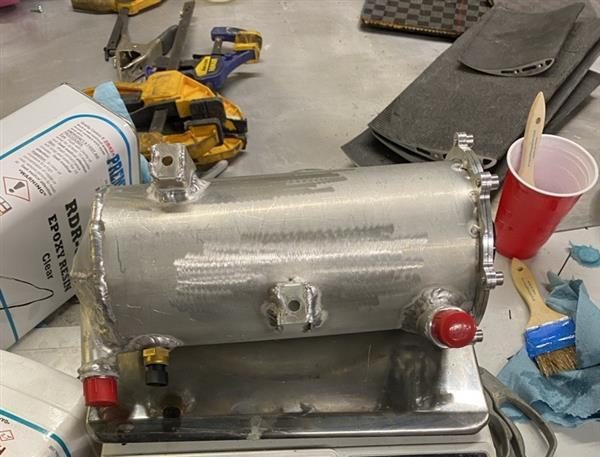
Tangential-inlet reservoir and catch can; TIG-welded aluminum.

Dry-sump oil reservoir

3.5 L capacity · TIG-welded aluminum

  • Tangential inlet swirls returning oil around the wall to passively de-aerate it before it reaches the engine.
  • Shortened baffling lets oil drain to the bottom faster, fixing the back-up seen in earlier designs; internal baffles separate droplets from vented air so the catch can stays dry.
  • Sized to keep the engine from running low on pressure. Pressure never dropped below 45 psi during Endurance.
45 psiminimum in Endurance
3.5 Loil capacity
CAD render of the CBR600RR dry-sump oil pan
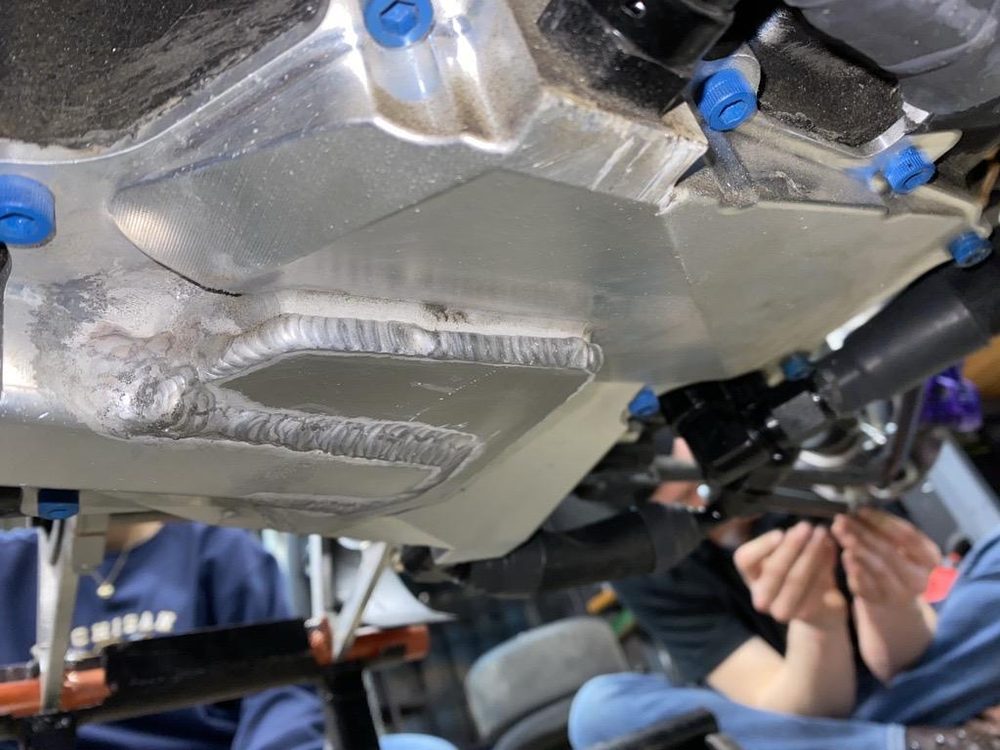
Oil pan installed on the engine
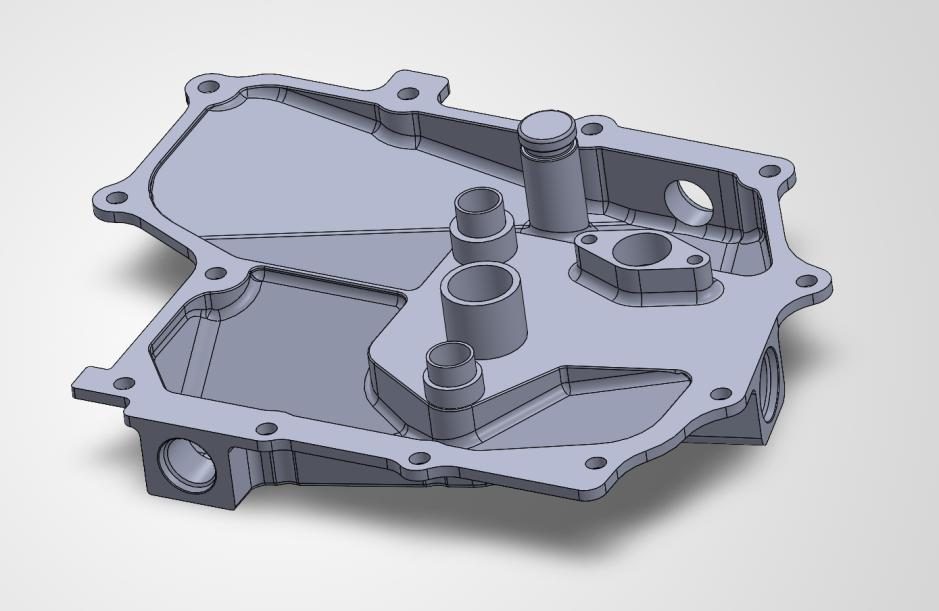
5-axis machined pan with welded bottom plate.

CBR600RR dry-sump oil pan

Designed for 5-axis CNC · welded bottom plate closes the pressure path

  • Two scavenge outlets so oil is always pulled into the pump under hard cornering and braking, when a single pickup uncovers.
  • Improved weld joint and thicker floor over the previous year's design, eliminating the cracking seen when lifting the engine in and out of the car.
  • Complex geometry designed around the machining process rather than fixed after the fact.
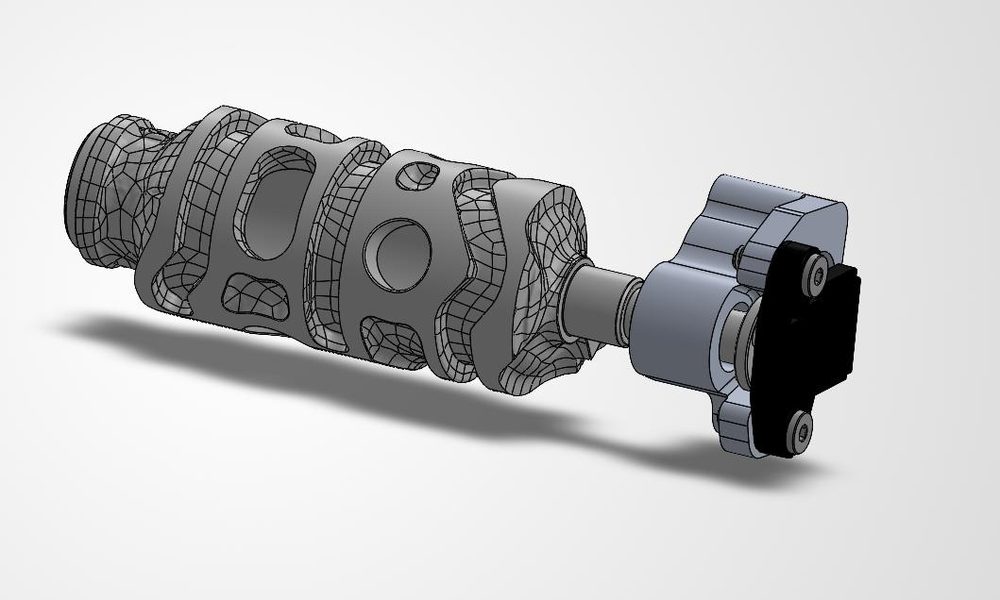
Shift drum with gear-position sensor bracket, CAD
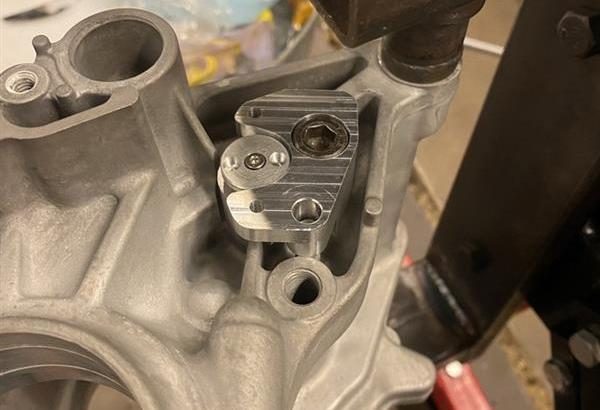
Sensor bracket installed on the engine case
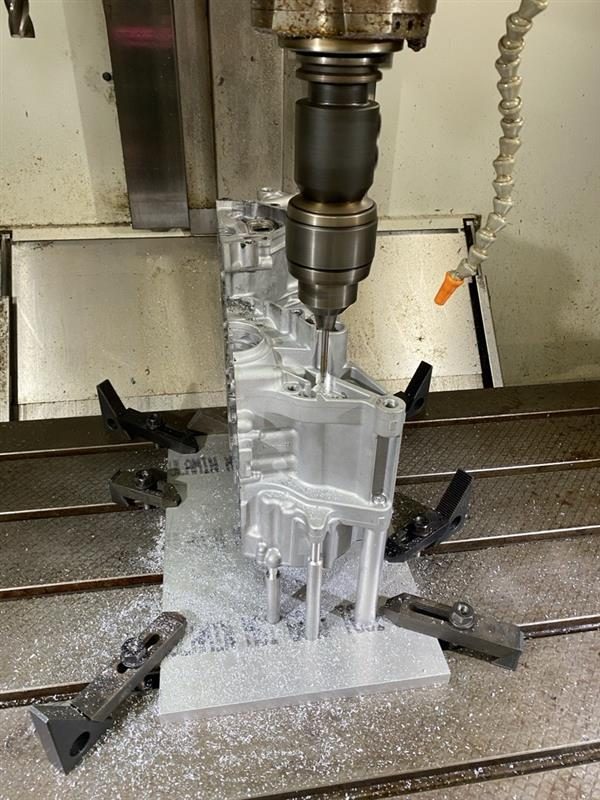
Engine case fixtured on the mill
Hall-effect sensor on the stock shift drum; X-ring and square-cut face seal.

Gear position sensor and machining fixture

Bracket, actuator shaft, and seals · plus the jig used to machine the case

  • Custom bracket mounts an actuator shaft to the stock shift drum; a hall-effect sensor tracks gear position for the driver and the ECU.
  • Enables closed-loop shifting at 50 ms, 100 ms faster than the prior year, improving acceleration and autocross times.
  • Sealed with an X-ring on the rotating shaft and a square-cut ring on the face to prevent oil leaks.
  • Designed and built a fixture to hold the irregular engine case rigidly on the mill, with a bolt-on datum bracket for zeroing. Three cases machined in one setup, all usable, to 0.01″.
50 msshift time
0.01″fixture tolerance

Personal vehicle projects

Parts designed for a 2015 Ford Focus ST, from cardboard mockup to daily use.

Intercooler duct CAD render, front
Intercooler duct CAD render, rear
Ducted air path from the lower grille opening to the intercooler face.

Intercooler air duct

Siemens NX · printed on a Blackbelt belt-type 3D printer

  • Captured the front-end packaging space with a cardboard mockup, measured it, and modeled the duct in NX to route air from the lower grille to the intercooler around existing structure.
  • Installed on the car. Charge-air temperatures dropped by about 3 degrees, bringing them to near ambient.
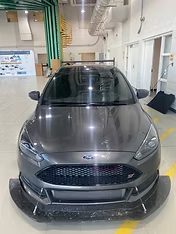
Focus ST with rear wing, front view
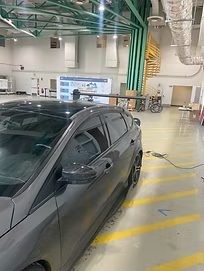
Focus ST with rear wing, side view
Carbon-fiber wing with laser-cut, formed aluminum mounts.

Active rear wing with control integration

NX airfoil · Ansys Fluent CFD · Arduino control

  • Modeled the airfoil in NX and optimized it for ease of manufacturing; simulated downforce and drag in Ansys Fluent.
  • Wing laid up in carbon-fiber composite; all mounts laser-cut and bent from aluminum.
  • An Arduino reads the brake-light circuit and GPS speed and drives two linear actuators through a DC motor driver.
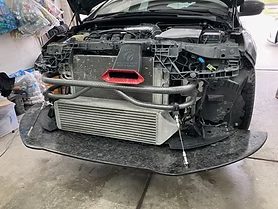
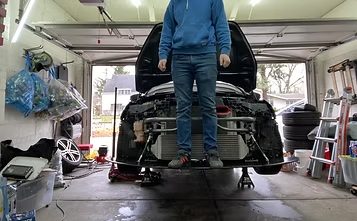
Front splitter mounted with bumper removed
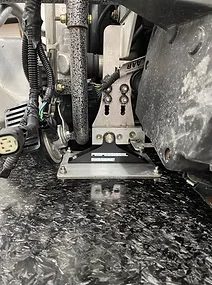
Quick-release bracket close-up
Standing on the splitter to demonstrate strength
Composite splitter on Professional Awesome Racing quick-release mounts.

Chassis-mounted front splitter and mounts

Composite splitter · adapter bracket developed with Professional Awesome Racing

  • Worked with the supplier to design an adapter bracket that lets their quick-release mounts carry a chassis-mounted splitter on the Focus ST, so it installs and removes quickly.
  • Composite construction keeps the splitter light while supporting more than 500 lb of downforce.
  • On the car: better stability at highway speed and a measurable fuel-economy gain.

Teaching

Four years as a teaching assistant in Wayne State's engineering design courses, most recently teaching Siemens NX and HyperMesh to graduate students.

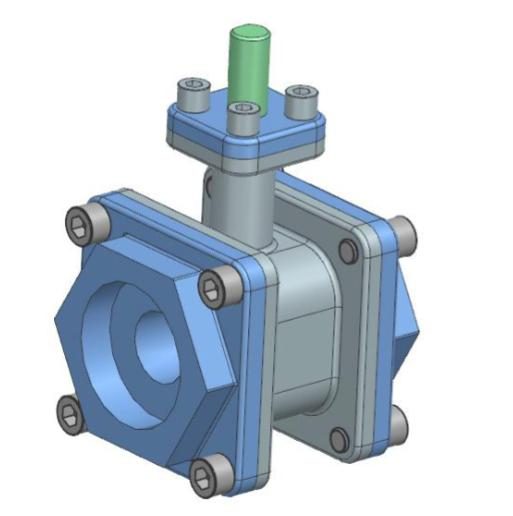
Ball valve assembly render
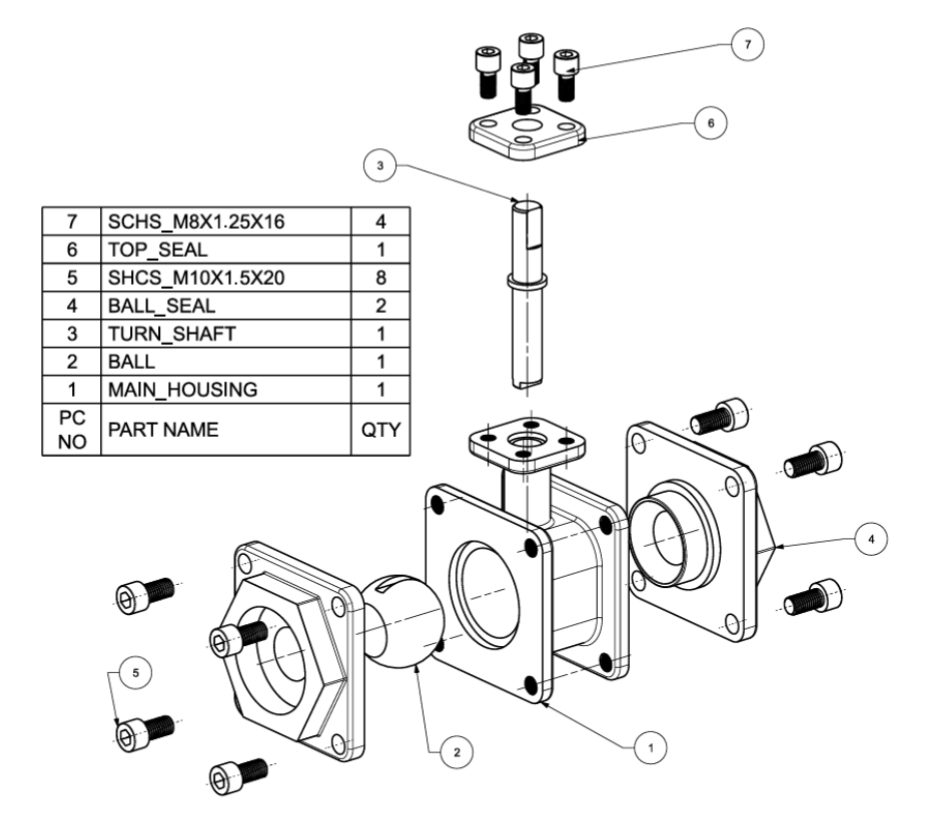
Exploded view with bill of materials
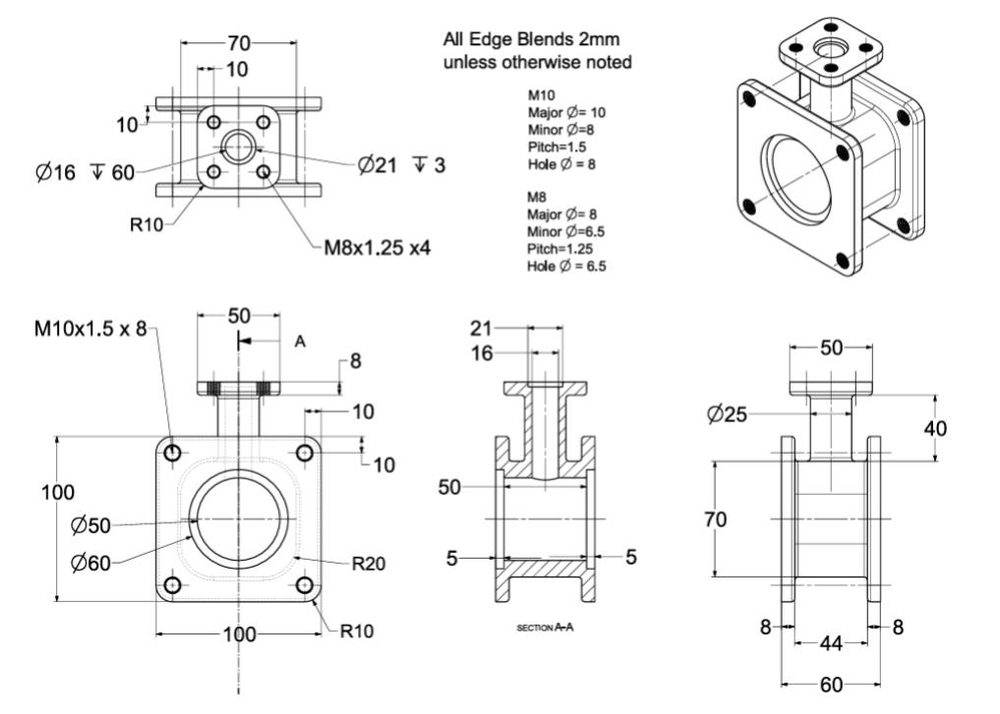
2D drawings of the ball valve parts
Exam parts: main housing, ball, turn shaft, seals, and fasteners with drawings and BOM.

BE1200 ball valve exam

Designed the parts, drawings, and BOM for the introductory CAD course final

  • Students read the 2D drawings, rebuilt each part in NX, and produced their own drawings, covering every skill from the semester.
  • Printed the full assembly so students could handle the real parts during the exam.
  • Taught 60+ graduate students NX constraints, motion simulation, and FEA, and led HyperMesh labs on meshing, boundary conditions, and interpreting results.

Education

Jan 2025 – May 2026

Master of Science, Mechanical Engineering

Wayne State University · GPA 3.58 / 4.0

Aug 2020 – Dec 2024

Bachelor of Science, Mechanical Engineering

Wayne State University · GPA 3.47 / 4.0

Tools and skills

Comfortable moving between the model, the analysis, and the shop floor.

CAD

Siemens NX (parametric modeling, advanced constraints, motion simulation), SolidWorks, Fusion 360, 2D drawings and drafting

Analysis

Ansys Fluent CFD, Ansys FEA, Altair HyperMesh, LS-DYNA, MATLAB

Fabrication

3-axis CNC milling, lathe, TIG welding (AC and DC), sheet metal, carbon-fiber composites, 3D printing

Powertrain and test

Engine calibration and dyno testing, AVL CAMEO, AVL IndiCom, ETAS INCA, CyFlex, Haltech NSP, AiM Race Studio, CAN, Arduino

Experience

May 2026 – present

Test Engineer, Excel Engineering

Operate engine test cells and work with OEM and supplier customers on test setup, safety, and data deliverables.

Sep 2024 – May 2026

Engine Systems Lead, Warrior Racing FSAE

Engine calibration and dyno testing cut 0–60 mph time by 0.6 s. Designed the fuel, oil, and gear-position systems above and implemented CAN telemetry.

Jan 2026 – May 2026

Graduate Teaching Assistant, Wayne State University

Taught Siemens NX and HyperMesh FEA to 60+ students; advised on material selection and manufacturability.

May 2024 – Aug 2024

Applications Engineering Intern, Parker Hannifin

Reviewed EV-platform sealing specifications and DVP&R documentation; researched emerging sealing technologies.

Jun 2022 – Dec 2025

Undergraduate Teaching Assistant, Wayne State University

Supported 100+ students per semester, ran the 3D-print lab, and cut print times 20% through printer upgrades.

Contact

Happy to talk through any of these projects in more detail.